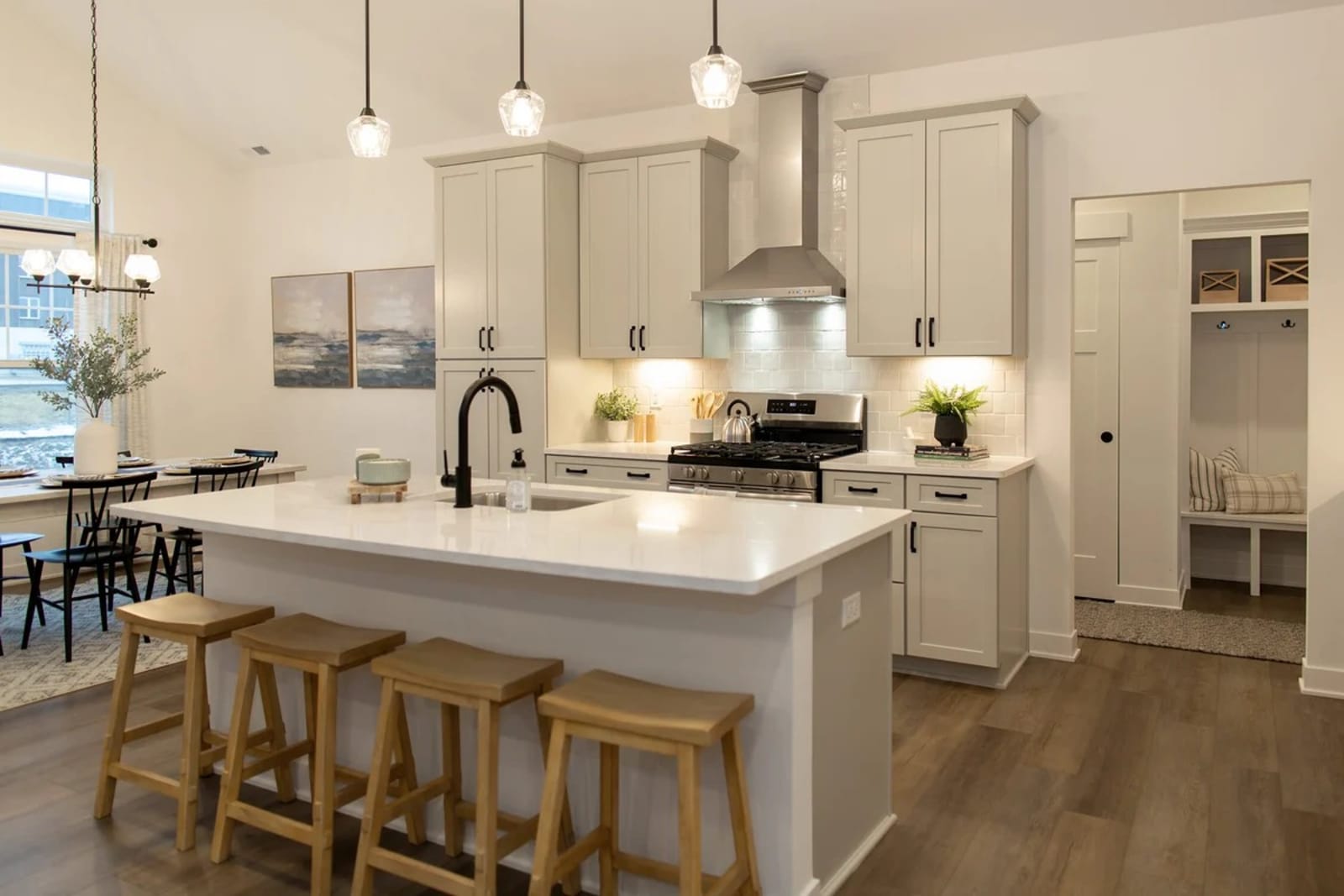
Countertop thickness rarely makes it onto anyone list of decisions, which is a shame, because it changes the character of a kitchen more than the colour of the stone does.
The standard, and why it exists
Most quartz and granite arrives at around three centimetres. It is thick enough to carry an overhang without support, it takes a range of edge profiles, and it reads as substantial without dominating the room. For most kitchens it is the right answer.
Going thinner
A slimmer top gives a lighter, more contemporary line and lets the cabinetry do the talking. It suits a kitchen where the doors are the feature. The trade-off is that longer overhangs need support underneath, which has to be planned rather than solved on installation day.
Going thicker
A built-up edge or a mitred apron gives you a heavy, architectural slab, and on an island it is genuinely striking. It also changes the proportions of everything around it, so the cabinetry and the splashback need to be specified with that in mind rather than after the fact.
Mixing the two
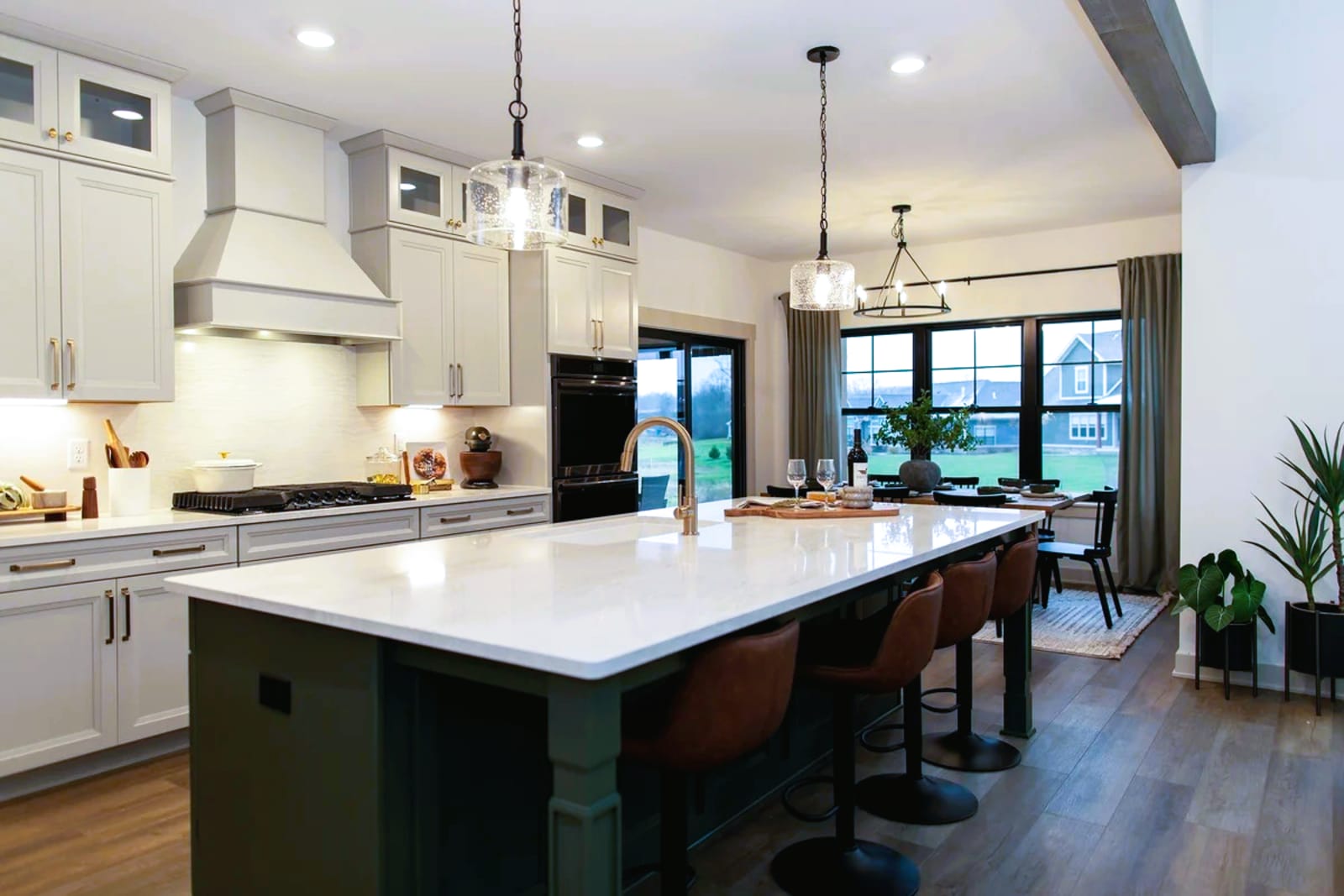
One trick worth knowing: a slimmer perimeter with a thicker island top gives the island its own presence without making the whole kitchen feel heavy. It is a small decision that does a lot of work.
Thickness is much easier to judge in person than on paper. Our showrooms have full slabs and finished tops so you can see the difference at eye level before you commit.